FIA_UI2026
- Posted on
Sepak bola punya berbagai cara untuk merayakan pencapaian. Bukan hanya yang terbaik, tetapi juga yang jauh dari harapan.
Salah satunya adalah penghargaan Bidone d’Oro, penghargaan “tong sampah” yang digagas Rai Radio 2 di Italia sejak 2003.
Penghargaan yang biasanya diumumkan berbarengan waktunya dengan terpilihnya peraih FIFA Ballon d’Or itu dianugerahkan kepada pemain yang dinilai tampil buruk dalam pergelaran liga sepakbola Italia selama semusim.
Penghargaan itu serupa dengan Golden Raspberry Awards atau Razzie Awards, antitetis untuk Academy Award (Oscar) bagi para insan berprestasi terbaik di ranah sinema dunia.
Sejumlah nama besar, karena prestasinya yang flop sepanjang musim tersebut, pernah dipilih para jurnalis dan penggemar sebagai penerima Bidone d’Oro.
Bintang Brasil seperti Rivaldo, Adriano, dan Alexandre Pato masuk dalam daftar peraih penghargaan “plesetan” tersebut.
Juga sejumlah pemain tenar lainnya seperti Diego Milito (Argentina), Christian Vieri (Italia), dan Ricardo Quaresma (Portugal).
Kisah itu tebersit di benak manakala pada minggu-minggu menjelang akhir tahun ini kita disuguhi banyak berita mengenai pemberian penghargaan untuk berbagai lembaga ataupun tokoh, termasuk para pejabat publik.
Organisasi pemberinya sangat beragam, ada yang sudah secara rutin bertahun-tahun memberikan penghargaan.
Namun ada juga organisasi yang relatif baru terdengar. Kategori penghargaan yang diberikan pun bisa sangat variatif, mulai kategori yang lazim terdengar seperti tokoh terbaik tahun ini atau tokoh dengan perusahaan yang memiliki market value terbesar.
Namun tak mengherankan jika ada kategori-kategori khusus yang seolah “disengajakan” atau “diada-adakan” untuk dianugerahkan kepada tokoh tertentu.
Penghargaan semestinya menjadi bentuk apresiasi yang diberikan atas raihan prestasi seseorang atau kelompok tertentu.
Agar menjadi penghargaan yang obyektif, penilaiannya mesti dilakukan dengan parameter yang terukur, teruji, dan dapat ditelusuri.
Dengan prasyarat itu, sebuah penghargaan akan mendapatkan marwahnya, benar-benar menjadi bentuk apresiasi atas capaian seseorang.
Pengakuan prestasi, keunggulan dan standar tinggi yang diciptakan, ataupun dampak dan kontribusi yang diberikan tersebut sekaligus diharapkan menjadi pemacu pihak lain untuk mereplikasi dan juga melebihi capaian-capaian tersebut di masa mendatang.
Di Indonesia, sejumlah penghargaan sudah bertahun-tahun rutin diberikan untuk pemerintah daerah.
Misalnya, penghargaan Adipura begitu lama menjadi ukuran prestasi daerah dengan pengelolaan lingkungan terbaik.
Penghargaan Pembangunan Daerah dianugerahkan untuk daerah dengan perencanaan dan pencapaian pembangunan terbaik.
Dalam perkembangan selanjutnya, setiap kementerian dan lembaga negara menginisiasi penghargaan untuk daerah, sesuai dengan kepentingan sektoral yang ditanganinya.
Hal itu di luar Indeks Reformasi Birokrasi hasil evaluasi Akuntabilitas Kinerja Instansi Pemerintah (AKIP) dan Reformasi Birokrasi (RB) yang menjadi salah satu faktor penentu utama dalam usulan, penetapan, dan besaran tunjangan kinerja kementerian/lembaga.
Respons sebaliknya juga muncul. Pemerintah daerah menargetkan perbaikan, memburu raihan penghargaan sebagai salah satu indikator pencapaian kinerja yang unggul.
Beberapa standar penilaian kinerja yang ditetapkan oleh pemerintah pusat, menjadi bagian upaya mendapatkan insentif untuk menambah keuangan daerah.
Karenanya wajarlah jika penilaian itu menjadi target dari tahun ke tahun, diturunkan sebagai indikator kinerja masing-masing satuan kerja pemerintah daerah.
Pun di sektor swasta ataupun BUMN/BUMD, perolehan penghargaan dipercayai bisa meningkatkan citra dan reputasi organisasi.
Setidaknya, penghargaan apapun yang dimuatkan dalam laporan tahunan (annual report) bisa menambah poin, terutama untuk penilaian individual direktur atau komisaris yang mendapatkan penghargaan tersebut.
Hukum pasar pun berlaku. Ketika kebutuhan untuk mendapatkan penghargaan begitu kuat, di sisi sebaliknya kemudian bermunculan institusi pemberi penghargaan.
Mereka lihai melihat peluang, menelisik siapa saja yang memerlukan penghargaan dan kemudian menawarkan penghargaan yang bisa memoles tampilan di hadapan publik.
Bahkan ada pula yang bisa mengakomodir bila ada pihak yang tanpa malu-malu memesan penghargaan tertentu. Pada tahun-tahun politik, menjelang konstestasi, tren pemberian penghargaan biasanya meningkat seiring kebutuhan yang meninggi.
Situasinya pas untuk mendongkrak popularitas (dan mungkin juga elektabilitas). Publik gampang terbius dengan figur atau organisasi yang terlihat seolah-olah begitu berprestasi, dengan deretan penghargaan yang diperoleh.
Mekanisme yang dimainkan para pemberi penghargaan mungkin tidak langsung transaksional, membayar dulu dan kemudian beroleh penghargaan. Dukungan pendanaan bisa dibingkai dalam bentuk sponsorship, misalnya.
Batu ujinya sebenarnya mudah, apalah penghargaan masih tetap akan diberikan jika organisasi atau tokoh yang dinominasikan tidak bersedia menjadi sponsor?
Cara yang lebih halus, penerima penghargaan “diwajibkan” untuk “membeli” tiket, memborong set meja/kursi tertentu dengan harga variatif sesuai dengan tata letak saat penganugerahan penghargaan, yang biasanya dilakukan di gedung atau hotel mentereng. Publikasi dan pemberitaan bisa disatukan dalam paket penghargaan model ini.
Model penghargaan “abal-abal” pastilah abai dalam penentuan kriteria yang digunakan dalam penilaian.
Bisa jadi, kategori pun baru disusun belakangan. Proses nominasi tidak jelas, bahkan mungkin sekadar untuk mengidentifikasi apakah bakal penerimanya apakah perempuan ataukah laki-laki.
Hal tersebut berentetan dengan penilaian yang bisa seperti tiba-masa tiba-akal, mendadak bisa muncul kandidat dan pemenang, tanpa kejelasan kapan penilaian berlangsung dan siapa yang ditugaskan menjadi tim penilai.
Akhirnya, penghargaan yang didapatkan lewat mekanisme yang benar, kriteria onjektif, serta nominasi dan penilaian yang fair tentu akan mengawetkan prestasi yang telah diraih. Penghargaan yang objektif adalah ganjaran layak untuk mengapresiasi sebuah prestasi.
Sebaliknya, kalau hal-hal yang menjadi norma objektif tadi tidak terpenuhi, percayalah bahwa penghargaan (abal-abal) segala rupa yang diberikan hanyalah sekadar validasi palsu pemulas kebanggaan semu.
Alih-alih apresiasi, buahnya adalah ledekan di hadapan publik yang makin pintar memamah informasi.
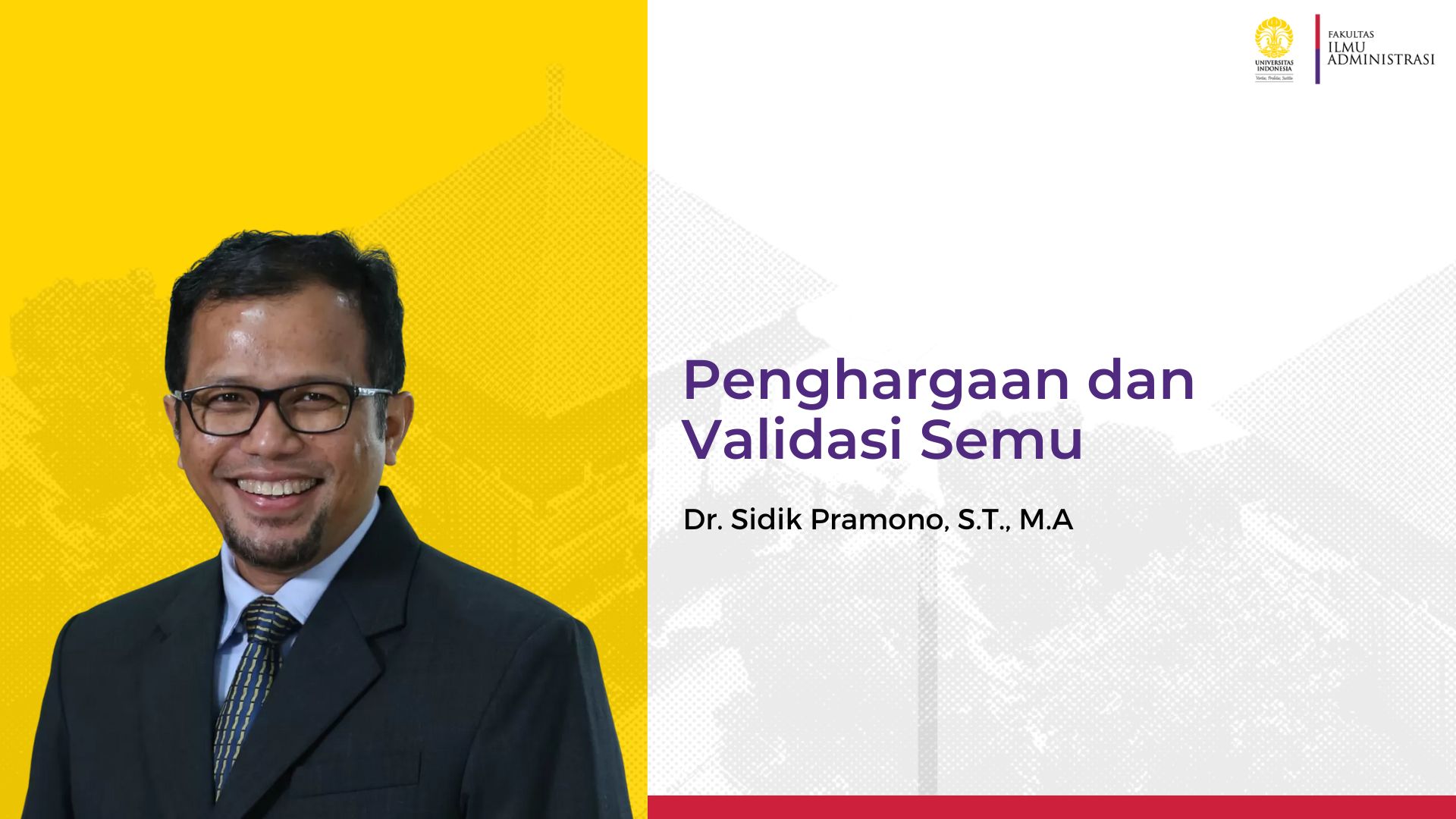
Dr. Sidik Pramono, S.T., M.A. Dosen Ilmu Administrasi Negara, FIA UI.
Sumber: https://kaltimpost.jawapos.com/opini/2386939136/penghargaan-dan-validasi-semu?page=4