Depok, December 21, 2023. The ability to adopt digitalization in marketing is becoming essential for Micro, Small, and Medium Enterprises (MSMEs). The rapid development of the digital world requires MSME players to be proficient in utilizing digital media—such as identifying market opportunities, analyzing consumer needs, promoting products, and handling customer complaints. Therefore, improving digital marketing literacy among MSMEs is crucial. In addition to digital marketing skills, MSMEs must also upgrade their knowledge in financial management, particularly in business taxation.
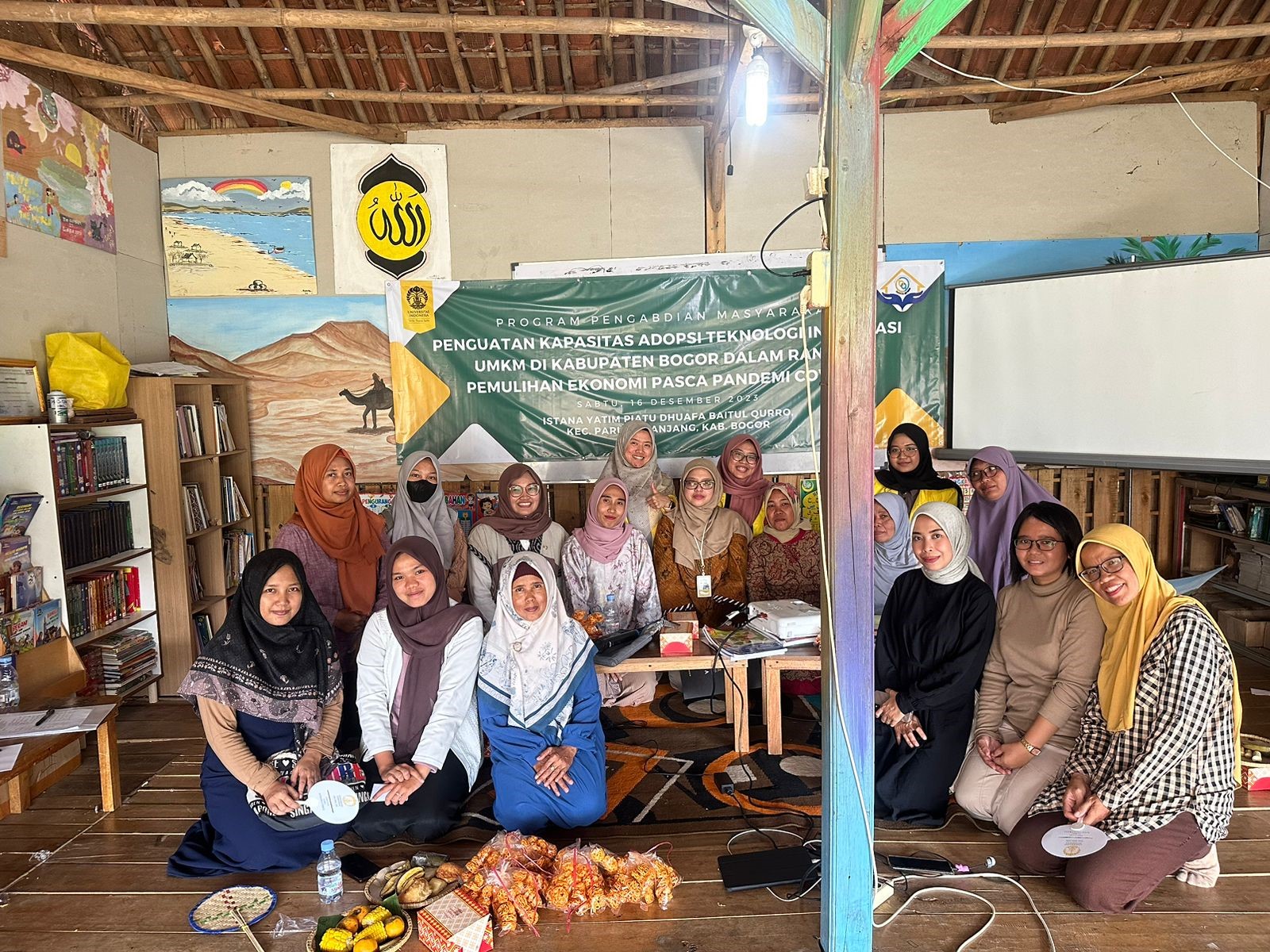
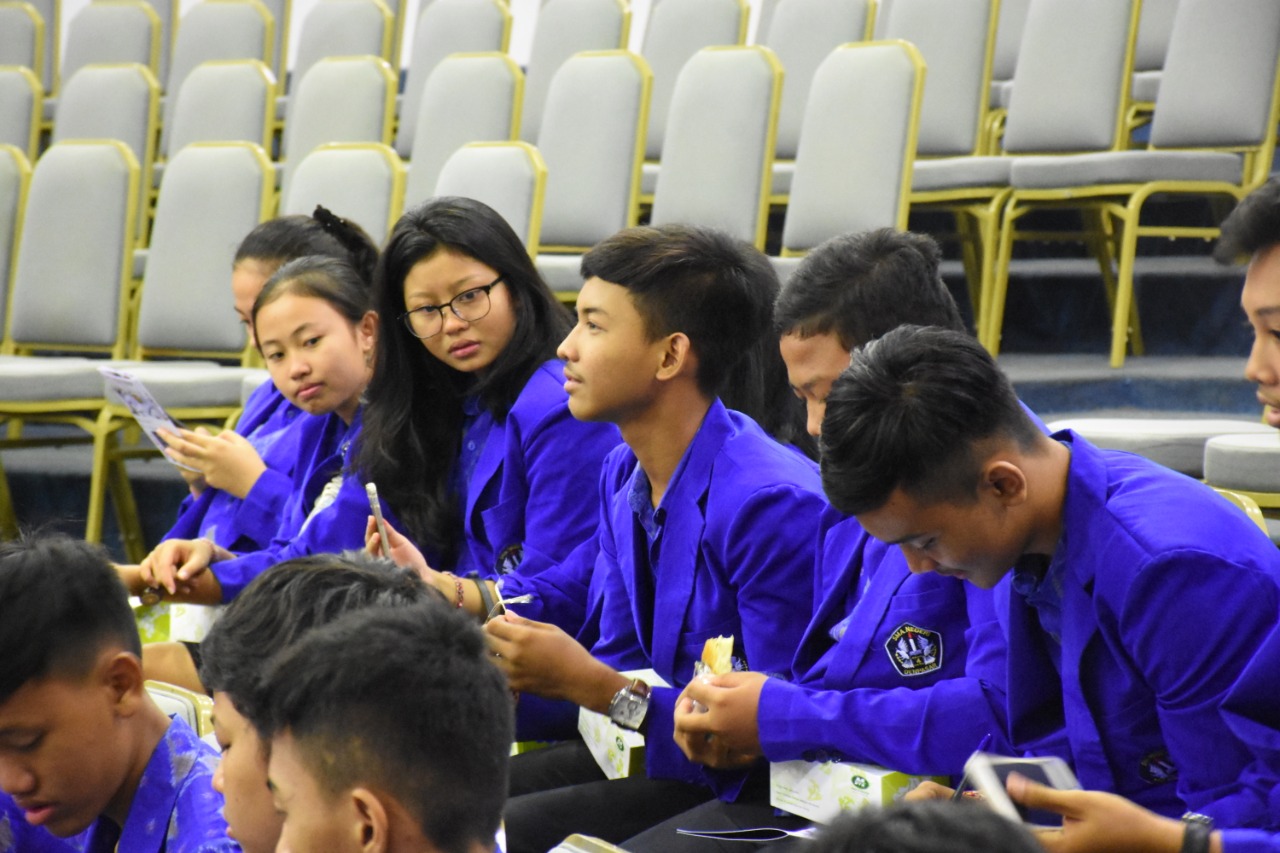
In response to this need, a team of lecturers and students from the Faculty of Administrative Sciences, Universitas Indonesia (FIA UI), conducted a community engagement program for MSME entrepreneurs in Parung Panjang District, Bogor Regency. The event was held at Istana Yatim Piatu Dhuafa Baitul Qurro, a foundation focused on educational and welfare development for orphans, widows, and the elderly in the area. This community engagement program, held on Saturday, December 16, 2023, was initiated by lecturers from the Department of Business Administration and the Department of Fiscal Administration at FIA UI, with funding support from the Directorate of Research and Community Engagement at Universitas Indonesia (DRPM UI). The program’s theme was “Strengthening the Capacity for MSME Technology Adoption in Bogor Regency to Support Post-Pandemic Economic Recovery.”
The program aimed to provide training in digital marketing and education on finance and taxation to enhance MSMEs’ technological adoption capabilities. According to Prima Nurita Rusmaningsih, S.A.P., M.A., a lecturer from the Business Administration Department at FIA UI and the program’s leader, “This activity is intended to improve MSME capabilities in marketing, finance, and taxation.”
“MSME players are required not only to have social media but also to understand digital marketing concepts, their functions, and the proper use of these tools to support product or service promotion. Digital tools are just instruments—what MSME players truly need is innovation. Innovation isn’t just about technology; it’s about ideas. Ideas are original and difficult for competitors to replicate, which is crucial for MSMEs,” Prima explained.
Wulandari Kartika Sari, S.Sos., M.A., a Fiscal Administration lecturer at FIA UI and a member of the program, highlighted the importance of financial record-keeping for business owners, including MSMEs. She emphasized that businesses should not wait until they grow larger to start maintaining financial records.
“If MSMEs want to advance, one crucial step is to maintain at least basic financial records if they cannot yet implement full bookkeeping. Understanding a business’s financial position helps entrepreneurs decide how to develop their business—whether through innovation, marketing strategies, or resource efficiency. Moreover, having proper financial reports enhances business credibility and facilitates access to capital from investors or creditors,” Wulandari explained.
Over the past decade, the government has provided special attention to MSMEs regarding their tax obligations by simplifying tax administration for this sector. This effort began with Government Regulation Number 46 of 2013 (PP 46/2013), which was later revised and improved by Government Regulation Number 23 of 2018 (PP 23/2018). Following the enactment of Law Number 7 of 2021 on the Harmonization of Tax Regulations, MSME income tax regulations were updated again through Government Regulation Number 55 of 2022 (PP 55/2022), commonly known as Final Income Tax for MSMEs.
As part of the community engagement program, the FIA UI team also provided MSME entrepreneurs with an understanding of income taxation and introduced them to digital tax applications. Through the M-Pajak digital platform provided by the Directorate General of Taxes, MSMEs can perform basic record-keeping without the need for formal bookkeeping. This digital platform covers services such as taxpayer registration (NPWP), financial record-keeping, generating e-billing for payments, and providing various tax-related information. The digital tax service aims to make tax administration easier for MSMEs.
Susi Damayanti, also known as Teh Ayya, one of the MSME entrepreneurs and the founder of Istana Yatim Piatu Dhuafa Baitul Qurro, expressed her enthusiasm:
“Until now, MSMEs have only learned digital marketing through self-study. Even if someone has a Google Business profile, it’s usually set up by someone else, and we don’t know how to operate it. The same goes for financial management and taxation. We are ready to learn!” she said firmly.