
FIA_UI2026
- Posted on
Selama bertahun-tahun, Indonesia mengandalkan insentif pajak sebagai strategi utama untuk menarik investor. Logikanya sederhana: dengan memberikan keringanan pajak, pemerintah berharap biaya dan risiko berbisnis di Indonesia, khususnya di sektor strategis, menjadi lebih rendah dan menguntungkan.
Insentif ini diharapkan dapat mendorong investasi langsung asing (FDI) yang pada gilirannya akan meningkatkan perekonomian melalui penciptaan lapangan kerja, transfer teknologi, peningkatan ekspor, dan menggeliatkan aktivitas usaha lokal.
Triliunan rupiah telah “dikorbankan” demi tujuan ini melalui skema tax holiday, tax allowance, dan pengurangan basis pajak. Berdasarkan Laporan Belanja Perpajakan 2023 dari Badan Kebijakan Fiskal (2024), Indonesia melepaskan penerimaan sebesar Rp362,5 triliun (US$21,9 miliar) atau setara 1,73 persen dari Produk Domestik Bruto (PDB) demi menggairahkan aktivitas ekonomi.
Namun, pertanyaan mendasar tetap menggantung: seberapa efektif sebenarnya insentif fiskal ini? Di balik angka-angka mengesankan, tersembunyi kenyataan yang jauh lebih suram.
Investigasi harian Kompas baru-baru ini mengungkap fakta memalukan: lebih dari setengah hambatan investasi di kawasan industri justru berasal dari organisasi masyarakat dan LSM lokal yang bertindak seperti kelompok mafia. Mereka menguasai proyek limbah, meminta jatah tenaga kerja, dan mengancam pabrik dengan aksi protes jika tuntutannya tidak dipenuhi.
Pada 2023 saja, satu kawasan industri di Jawa Barat menerima 130 proposal dari kelompok seperti ini—sebagian besar terkait proyek pengelolaan limbah. Pola ini berlanjut pada tahun berikutnya: dari 122 proposal, hanya satu yang berkaitan dengan isu ketenagakerjaan, sisanya tetap soal limbah, yang kini dipandang sebagai “tambang emas” oleh kelompok preman berkedok organisasi sosial.
Pola mengkhawatirkan ini bersamaan dengan menurunnya kepercayaan investor, tercermin dari kinerja FDI yang terus melemah. Menurut data Dana Moneter Internasional (IMF), aliran masuk FDI sebagai persentase dari PDB Indonesia mengalami tren penurunan: dari 2,2 persen pada 2019 menjadi 1,8 persen pada 2020 dan 2021, sedikit naik ke 1,9 persen pada 2022, lalu anjlok ke 1,6 persen pada 2023.
Fenomena ini mengingatkan pada kondisi di Italia selatan, di mana kejahatan terorganisir secara sistematis menghambat investasi. Dalam studi “Organized crime, the quality of local institutions and FDI in Italy”, Daniele dan Marani menemukan korelasi negatif yang signifikan antara kejahatan terorganisir dan FDI—bahkan ketika insentif pajak ditawarkan. Dengan kata lain, semenarik apa pun tawaran insentif pajak, investor akan mundur jika harus menghadapi pemerasan dan intimidasi.
Saat kelompok preman gaya mafia menyusup ke fungsi inti industri, insentif pajak menjadi tidak relevan—hanya sekadar pemanis tanpa makna.
Lebih parah lagi, praktik premanisme ini tidak berdiri sendiri. Mereka terhubung dengan aktor lokal, seperti aparatur desa dan tokoh masyarakat, yang secara terbuka memeras pabrik melalui rekomendasi tenaga kerja paksa, razia perizinan, hingga pemaksaan vendor. Ini bukan sekadar pelanggaran hukum, tapi bentuk kriminalitas yang terinstitusionalisasi.
Ketika negara hanya fokus pada pemberian insentif pajak tanpa memperkuat ketahanan institusi lokal, yang terjadi adalah tumbuhnya ekosistem kriminal yang dilindungi oleh semu legalitas.
Dari sudut pandang fiskal, kehilangan penerimaan besar-besaran ini pun belum tentu memberikan nilai tambah. Megersa dalam “Review of tax incentives and their impacts in Asia” (2019) mencatat bahwa insentif Indonesia secara signifikan menurunkan effective tax rate (ETR) lebih dari separuh. Tanpa pengukuran yang akurat terhadap respons perilaku, insentif ini berisiko menjadi pemborosan, hanya menambah laba investor yang sebenarnya tetap akan datang tanpa insentif.
Dalam makalah “FDI and investment barriers in developing economies” (2013), Arita dan Tanaka menemukan bahwa penghapusan hambatan masuk seperti prosedur diskriminatif dan kekerasan informal berdampak jauh lebih besar terhadap keputusan investasi dibanding sekadar pemotongan pajak. Perusahaan multinasional cenderung memperluas operasinya di negara yang menghapus hambatan non-pajak, bukan sekadar yang menawarkan diskon pajak.
Pemerintah tidak bisa lagi menutup mata. Meningkatnya aksi premanisme di kawasan industri bukan hanya masalah ketertiban umum, tetapi juga ancaman ekonomi. Ini bukan sekadar kriminalitas, tapi kegagalan sistemik dalam menegakkan hukum dan menciptakan iklim usaha yang kondusif.
Saat negara menawarkan insentif pajak, sejatinya negara “membayar” agar Indonesia lebih menarik di mata investor. Namun jika lingkungan itu justru penuh ancaman dan pemaksaan, insentif tersebut hanya menjadi bahan bakar bagi kekacauan.
Tiga langkah mendesak perlu segera dilakukan agar insentif pajak tidak sia-sia dan benar-benar menghasilkan investasi nyata.
Pertama, reformasi menyeluruh terhadap pengawasan organisasi massa dan LSM, khususnya di kawasan industri. Kementerian Dalam Negeri dan Polri harus proaktif mengaudit status hukum, sumber dana, dan aktivitas organisasi tersebut. Sertifikasi ulang atau verifikasi berkala yang melibatkan pemda dan pelaku usaha harus diterapkan untuk menutup organisasi yang menyimpang.
Kedua, bentuk Satuan Tugas Keamanan Industri lintas lembaga yang fokus pada premanisme ekonomi, bukan sekadar kriminalitas jalanan. Satgas ini harus bekerja sama dengan BKPM untuk benar-benar melindungi investasi, bukan sekadar formalitas.
Ketiga, evaluasi insentif pajak harus memasukkan model respons perilaku, seperti yang dilakukan negara maju. Model Computable General Equilibrium (CGE), yang saat ini digunakan untuk mengukur dampak PPN, perlu diperluas untuk menilai efek nyata tax holiday dan allowance terhadap investasi baru. Dengan begitu, pemerintah tahu bukan hanya berapa pendapatan yang hilang, tetapi apa nilai timbal balik yang diperoleh.
Premanisme ekonomi tidak bisa diselesaikan dengan uang. Insentif pajak terbaik pun tak berarti apa-apa di hadapan pemerasan. Jika kita ingin benar-benar diakui sebagai pusat investasi global, perjuangan tidak dimulai dari ruang rapat DJP atau BKPM, tapi dari jalanan kawasan industri yang kini dikuasai organisasi dengan proposal dan ancaman.
Pemerintah harus memilih: terus membakar triliunan untuk insentif yang terbuang, atau mulai membangun sistem di mana setiap rupiah dukungan fiskal menghasilkan nilai pembangunan yang nyata. Sebab jika premanisme dibiarkan, insentif pajak hanya akan menyuburkan ekonomi gelap. Dan tak satu pun investor mau menanam modal di tanah yang sudah tercemar.
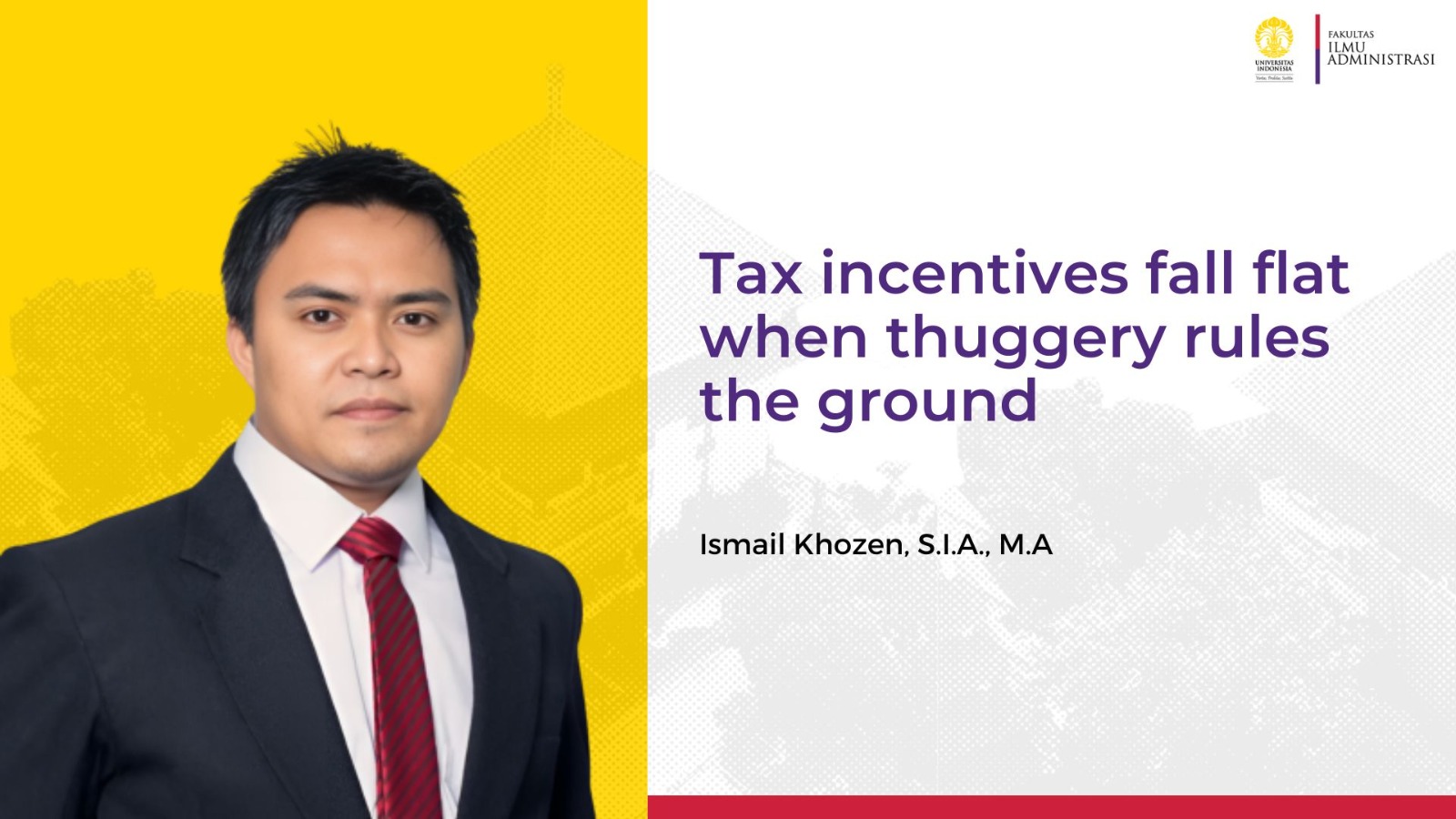
Oleh: Ismail Khozen, S.I.A., M.A., Dosen Administrasi Fiskal, Universitas Indonesia
Sumber: The Jakarta Post